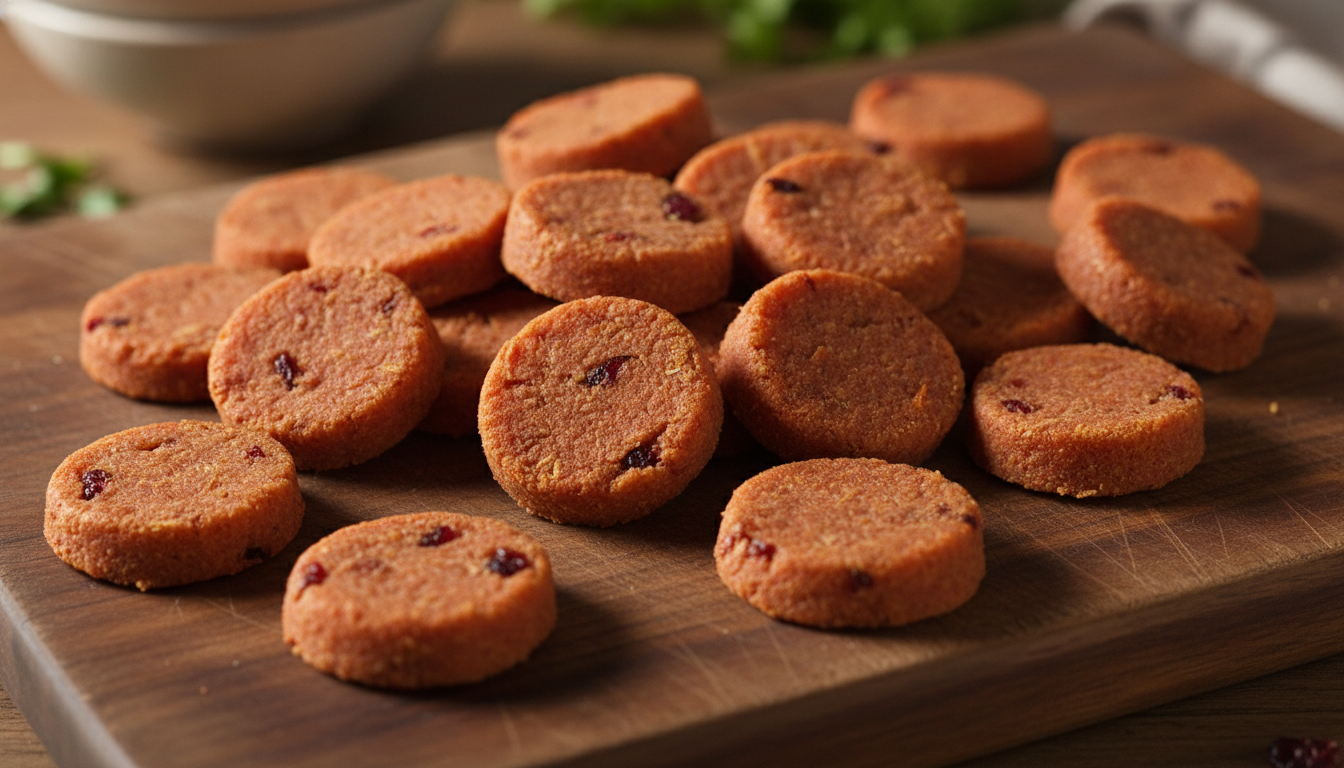

Thanksgiving is a time to gather and share gratitude, and there's no reason why your dog shouldn't join in the festivities with a special treat of their own. These Cranberry Yam Bites are a way to include your pet in the holiday spirit. They're easy to make, and you'll love the look on your dog's face when they get a taste of these seasonal bites!
Why This Recipe Works
Cranberry Yam Bites bring together the warm, earthy flavors of yams and the tartness of cranberries, creating a unique treat your dog will enjoy. Yams, also known as sweet potatoes, are a source of fiber and have a naturally sweet flavor that dogs tend to love. Cranberries add a tart contrast and are well-known for their festive appeal. When combined, these ingredients create a tasty and wholesome snack that's perfect for a Thanksgiving treat.
The texture of these bites is just right for dogs, soft enough for easy chewing but firm enough to hold their shape during baking. The addition of coconut flour helps bind the ingredients together, while turkey adds a savory note that enhances the overall flavor profile.
What You'll Need
Ingredients
- 1 cup cooked yam, mashed
- 1/2 cup cranberries (fresh or frozen, unsweetened)
- 1/2 cup cooked turkey, shredded (plain, no seasonings)
- 1/4 cup coconut flour
- 1 egg, beaten
- 1 tablespoon parsley, finely chopped
Equipment
- Mixing bowl
- Baking sheet
- Parchment paper
- Measuring cups and spoons
- Fork or potato masher
- Oven
Making this for your dog?
Save it in WellWhisker and get a serving size made for your pet.
Get StartedStep-by-Step Instructions
- Preheat the Oven: Start by preheating your oven to 350°F (175°C). Line a baking sheet with parchment paper to prevent sticking.
- Prepare the Yams: In a mixing bowl, mash the cooked yams with a fork or potato masher until smooth. The consistency should be creamy with no large lumps.
- Mix in the Ingredients: Add the cranberries, shredded turkey, and parsley to the mashed yams. Stir until evenly combined. The mixture should be colorful and well-mixed.
- Incorporate Coconut Flour: Gradually add the coconut flour to the mixture, stirring continuously. The coconut flour will help absorb moisture and bind the ingredients together.
- Add the Egg: Crack the egg into the mixture and stir until everything is well combined. The egg acts as an additional binder to hold the bites together. Note: Raw eggs can pose a risk to immunocompromised dogs.
- Shape the Bites: Using your hands, form the mixture into small, bite-sized balls or bite-sized patties. Place them onto the prepared baking sheet, spacing them evenly.
- Bake: Place the baking sheet in the preheated oven and bake for 20-25 minutes, or until the bites are firm and lightly golden. Allow them to cool completely before serving to your dog.
Freezing & Storage
Once cooled, store the Cranberry Yam Bites in an airtight container in the refrigerator for up to a week. For longer storage, you can freeze them for up to three months. Simply thaw in the refrigerator before serving.
Serving Guide
- Under 20 lbs: Serve 1-2 bites.
- 20-50 lbs: Serve 2-3 bites.
- 50+ lbs: Serve 3-4 bites.
These treats are great as a special snack during the holiday season. They can be given after a walk or during a calm moment at home. Remember, treats should make up no more than 10% of your dog's daily calorie intake.
Safety Notes
- Always use plain, cooked turkey without any seasonings, as some ingredients commonly used in cooking (like onions and garlic) are toxic to dogs.
- Monitor your dog for any allergic reactions, especially if you're introducing cranberries for the first time.
- Always supervise your pet when giving treats to ensure they chew properly and don't swallow large pieces.
- If using canned yams, ensure they are plain and not packed in syrup or additional sweeteners.
- Introduce new foods gradually to monitor for any adverse reactions.
Make It Easier / Harder
- Easier: For a simpler version, you can omit the parsley and shape the mixture into larger patties for easier handling.
- Harder: Add a few pieces of cooked green beans or peas into each bite for a hidden surprise that your dog can sniff out.
Frequently Asked Questions
Can I use canned yams for this recipe?
Yes, you can use canned yams, but make sure they're plain and not packed in syrup or any additional sweeteners.
Are cranberries safe for all dogs?
Cranberries are generally safe for dogs in small amounts. However, if your dog has never had cranberries before, introduce them slowly to watch for any adverse reactions.
Can I substitute turkey with another protein?
Absolutely! Cooked chicken or lean beef can be used as an alternative to turkey if your dog prefers those flavors.
How do I know if my dog is allergic to any of these ingredients?
Introduce any new ingredient one at a time and watch for signs of allergic reactions, such as skin irritation, vomiting, or changes in stool. If you notice any of these symptoms, consult your veterinarian.
Key Takeaways
- Cranberry Yam Bites combine sweet yams and tart cranberries for a festive treat.
- Coconut flour and egg help bind the bites and maintain their shape.
- Store in the fridge or freeze for up to three months.
- Serve in moderation, based on your dog's size.
- Always supervise your dog when offering new treats.
Save this recipe for later
Keep the recipes your dog loves in one place, find new ones every week, and import the ones you find anywhere else. WellWhisker sizes every serving for your pet.
Want more like this? Browse all our no-bake treats, or see every homemade dog treat recipe in one place. Also in: thanksgiving treats, sweet potato treats.
This post contains affiliate links. If you purchase through these links, we may earn a small commission at no extra cost to you. This helps us keep creating free recipes for pet parents everywhere.
Disclaimer
This recipe is for supplemental feeding and enrichment only, not a meal replacement. Every pet is different. If your pet has food allergies, sensitivities, or health conditions, consult your veterinarian before introducing new foods. WellWhisker provides general wellness information and is not a substitute for professional veterinary advice.