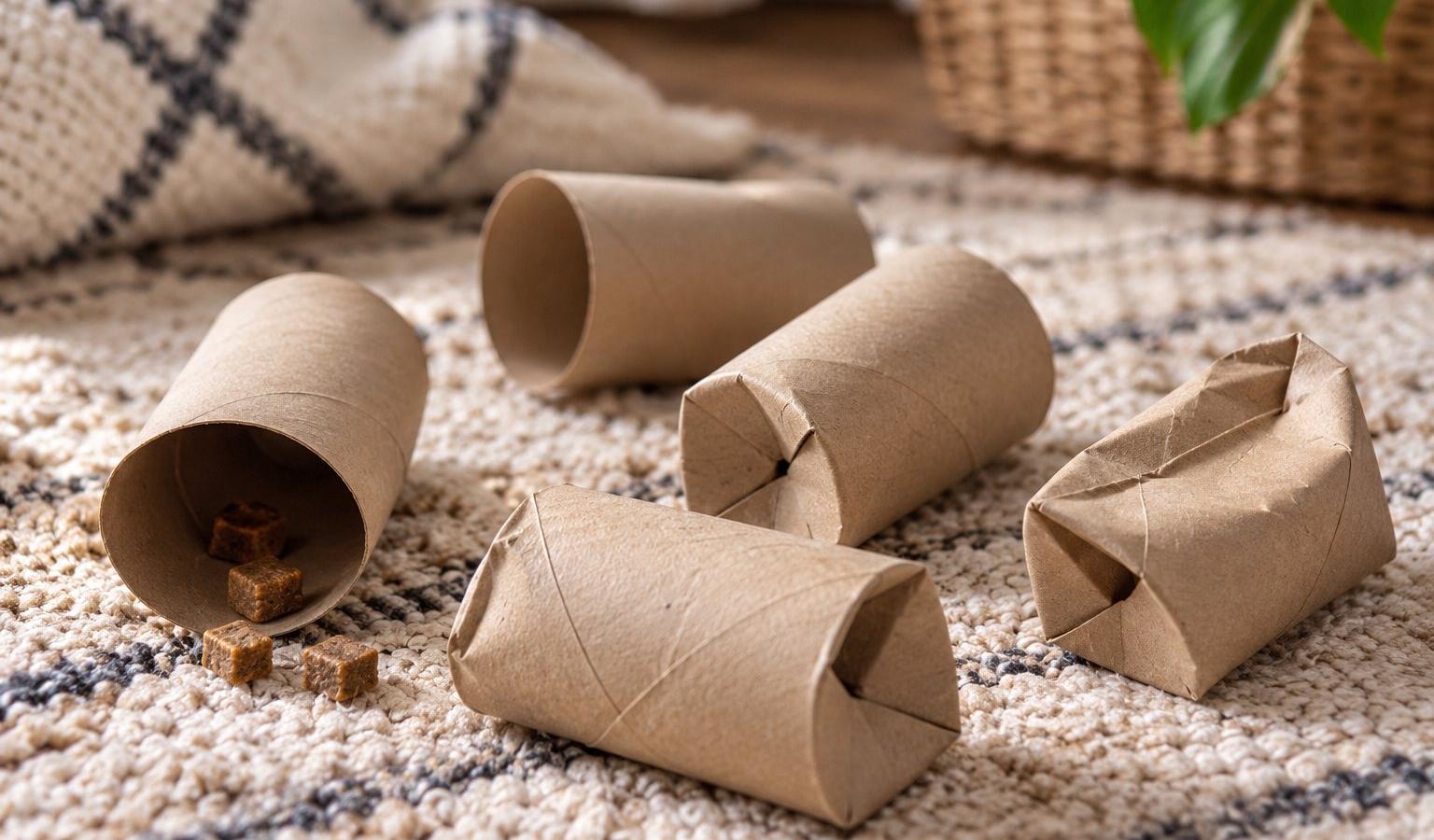

Looking for a fun and easy way to engage your dog both mentally and physically? The Cardboard Roll Enrichment Trail is an excellent DIY activity that brings excitement and problem-solving into your dog's day. All you need are some empty toilet paper rolls and your dog's favorite treats or kibble to create a stimulating game that will keep them entertained and curious.
Why This Recipe Works
Dogs love activities that challenge their senses and instincts. The Cardboard Roll Enrichment Trail taps into your dog's natural foraging and sniffing behaviors, making it a hit for most pups. The texture of the cardboard combined with the enticing scent of treats inside encourages dogs to use their noses and paws to figure out how to get to the goodies. Plus, it's a great use for those empty toilet paper rolls you probably have lying around!
The key ingredients here are simple: treats or kibble. These provide the motivation your dog needs to engage with the cardboard rolls. The act of nudging and tearing at the cardboard also provides a satisfying physical outlet. This enrichment activity is not only fun but also a great way to use part of your dog's daily kibble ration creatively, helping to slow down their eating and add mental stimulation to their routine.
What You'll Need
Ingredients
- Empty toilet paper rolls
- Homemade treats or your dog's daily kibble
Equipment
- None! Just your hands and a little creativity.
Making this for your dog?
Save it in WellWhisker and get a serving size made for your pet.
Get StartedStep-by-Step Instructions
- Prepare the Rolls: Gather several empty toilet paper rolls. Make sure they're clean and free from any adhesives or decorations.
- Add the Goodies: Take a small handful of your dog's favorite treats or part of their daily kibble and place it inside each roll. You don't need to fill it completely, a few pieces are enough to capture their interest.
- Seal the Ends: Fold in one end of the roll to close it, creating a little pocket. Then fold in the other end to secure the treats inside. The goal is to make it challenging enough that your dog has to think about how to open it, but not so difficult that they get frustrated.
- Create the Trail: If you're using multiple rolls, you can create a trail or scatter them around the house or yard for your dog to find. This adds an element of surprise and encourages exploration.
- Let the Fun Begin: Hand the roll to your dog and watch as they sniff, nudge, and paw at the roll to get to the treats. Always supervise your dog during this activity to ensure they don't ingest any pieces of cardboard.
Freezing & Storage
Since this activity doesn't involve any perishable ingredients, there's no need to freeze or store the rolls once they're prepared. Simply keep the rolls on hand to use whenever you want to engage your dog in a fun and interactive game.
Serving Guide
- Under 20 lbs: Use smaller rolls or cut the rolls in half, offering one at a time.
- 20-50 lbs: One or two rolls per session, depending on your dog's interest and energy level.
- 50+ lbs: Two to three rolls, spaced out to encourage movement.
You can offer this enrichment activity a few times a week, especially if you're using part of your dog's regular kibble ration. It's a great pre-dinner activity to work up an appetite or as a fun diversion when you need to keep them occupied.
Safety Notes
- Monitor your dog closely to ensure they don't swallow any cardboard. The focus should be on getting the treats, not consuming the roll.
- If your dog tends to eat things they shouldn't, consider supervising more closely or choosing a different enrichment activity.
- Treats should make up no more than 10% of your pet's daily calorie intake.
- Always introduce new enrichment activities slowly and watch for any adverse reactions.
Make It Easier / Harder
- Make It Easier: For beginners or younger dogs, leave one end of the roll slightly open to give them an easier start.
- Make It Harder: For more experienced dogs, use thicker cardboard rolls or add a few extra folds to the ends. You can also increase the number of rolls or hide them in more challenging locations.
Frequently Asked Questions
How can I make the cardboard roll more challenging?
You can increase the difficulty by folding the ends more tightly, adding a few layers of wrapping with additional toilet paper rolls, or by creating a trail where the rolls are partially hidden.
Is it safe for my dog to chew on cardboard?
While the focus is on getting to the treats, some dogs might chew on the cardboard. Always supervise to ensure they don't ingest it. If your dog is a heavy chewer, this may not be the best activity for them.
Can I use paper towel rolls instead of toilet paper rolls?
Yes, paper towel rolls work just as well and can be cut to size. They can provide a slightly bigger challenge due to their length.
What if my dog isn't interested?
Try using a high-value treat that your dog loves to pique their interest. You can also demonstrate how to start by partially opening the roll to show the treats inside.
Key Takeaways
- Simple DIY enrichment using empty toilet paper rolls and treats.
- Encourages natural foraging and sniffing behaviors.
- Use as part of regular feeding routine to slow down eating.
- Always supervise to prevent ingestion of cardboard.
- Adjust difficulty based on your dog's experience and interest.
Save this recipe for later
Keep the recipes your dog loves in one place, find new ones every week, and import the ones you find anywhere else. WellWhisker sizes every serving for your pet.
Want more like this? Browse all our enrichment ideas, or see every homemade dog treat recipe in one place.
This post contains affiliate links. If you purchase through these links, we may earn a small commission at no extra cost to you. This helps us keep creating free recipes for pet parents everywhere.
Disclaimer
This recipe is for supplemental feeding and enrichment only, not a meal replacement. Every pet is different. If your pet has food allergies, sensitivities, or health conditions, consult your veterinarian before introducing new foods. WellWhisker provides general wellness information and is not a substitute for professional veterinary advice.