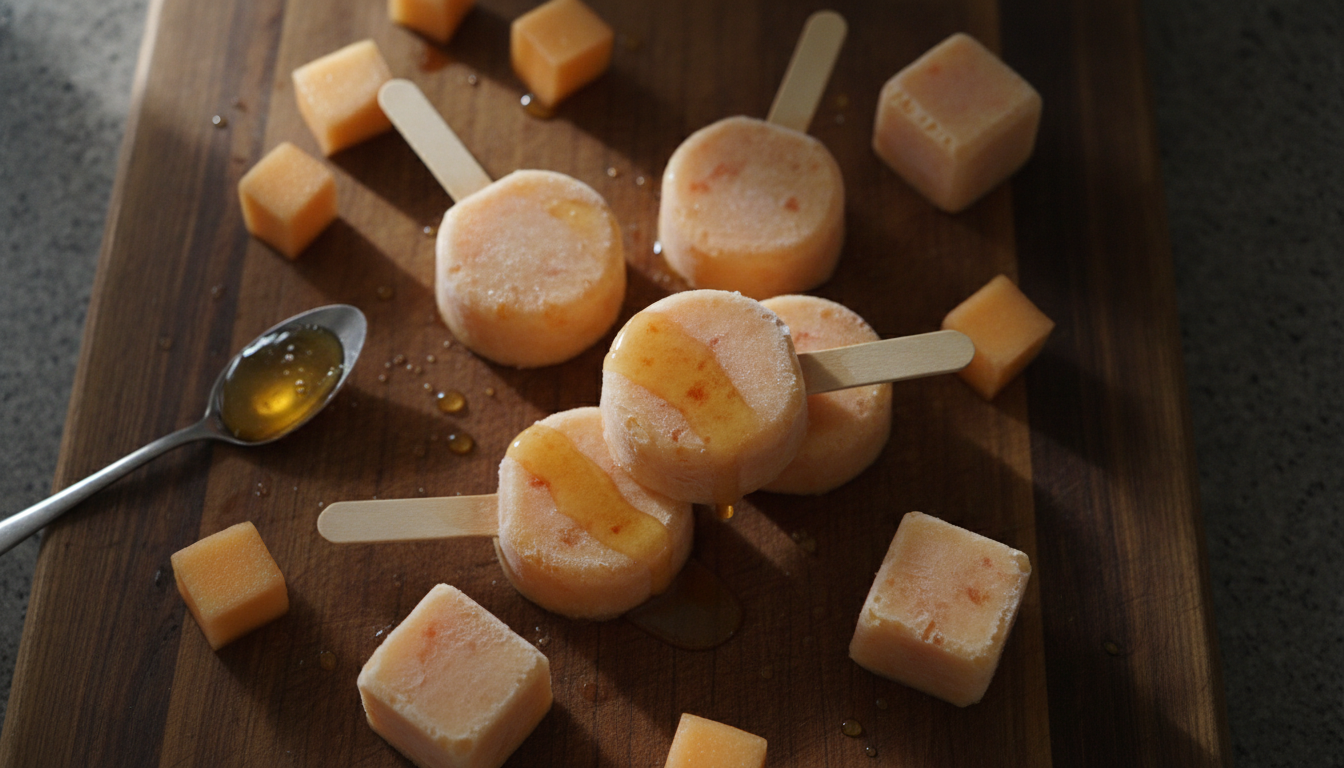

Summer days can be tough on our dogs, and what better way to help them cool off than with a refreshing frozen treat? Introducing our Cantaloupe and Honey Pupsicles, a delicious and hydrating recipe perfect for dogs. These pupsicles are designed to be made in molds or ice cube trays, making them easy to prepare and serve. Dogs will love the natural sweetness of cantaloupe paired with a hint of honey, and you'll love knowing they're getting a nutritious snack.
Why This Recipe Works
Frozen pupsicles are not only a fun treat for dogs, but they also provide essential hydration, especially during warmer months. Licking and chewing on these frozen delights can help keep your dog cool and entertained, while also promoting oral health by reducing plaque buildup.
Nutritional Benefits of Key Ingredients
- Cantaloupe: This sweet melon is packed with vitamins A and C, which are excellent for immune support and skin health. It's also low in calories, making it a guilt-free treat for your pup.
- Honey: Used sparingly, honey adds a touch of sweetness and provides natural antioxidants that can support your dog's overall health.
The combination of cantaloupe and honey creates a flavorful, nutrient-rich treat that dogs will find irresistible. Plus, these pupsicles are easy to make and customize, so you can adjust the recipe to suit your dog's preferences or dietary needs.
What You'll Need
Ingredients
- 2 cups cantaloupe, peeled and cubed
- 1 tablespoon honey
- 1/2 cup plain yogurt (no xylitol)
- 1/4 cup water
- 1 tablespoon chia seeds
Equipment
- Blender or food processor
- Silicone pupsicle mold or ice cube tray
- Mixing bowl
- Spoon
Making this for your dog?
Save it in WellWhisker and get a serving size made for your pet.
Get StartedStep-by-Step Instructions
- Prepare the Cantaloupe: Begin by peeling and cubing the cantaloupe. Make sure to remove all seeds and the rind, as they can be harmful to dogs. You should have about 2 cups of cantaloupe cubes.
- Blend Ingredients: In a blender or food processor, combine the cantaloupe cubes, honey, yogurt, water, and chia seeds. Blend until the mixture is smooth and looks like a thick, creamy paste. The chia seeds will add a slight texture and nutritional boost.
- Fill the Molds: Carefully pour the blended mixture into your silicone pupsicle mold or ice cube tray. Fill each compartment to the top, leaving a little space to allow for expansion as it freezes.
- Tap to Settle: Gently tap the mold on the counter to remove any air bubbles and ensure even distribution of the mixture.
- Freeze: Place the filled mold in the freezer for at least 4 hours, or until the pupsicles are completely frozen. For best results, leave them overnight.
- Unmold and Serve: Once frozen, remove the pupsicles from the mold. If they're difficult to unmold, run warm water over the bottom of the mold for a few seconds to loosen them.
Freezing & Storage
- Freezing Time: Allow the pupsicles to freeze for at least 4 hours, preferably overnight.
- Storage: Once frozen, you can store the pupsicles in an airtight container or freezer bag. They will keep in the freezer for up to 3 months.
- Fridge vs Freezer: Always store the pupsicles in the freezer. They are meant to be served frozen.
Serving Guide
- Portion Sizes:
- Small dogs (under 20 lbs): 1 pupsicle
- Medium dogs (20-50 lbs): 2 pupsicles
- Large dogs (50+ lbs): 3 pupsicles
- Frequency: Serve pupsicles as an occasional treat during hot days, or whenever your dog needs a cool, refreshing snack. It's best to offer them during times when your dog can enjoy them uninterrupted, such as after a walk or during a relaxing afternoon.
Safety Notes
- Allergy Alerts: Introduce new ingredients like chia seeds or honey one at a time to watch for any allergic reactions.
- Caloric Intake: Remember that treats should make up no more than 10% of your pet's daily calorie intake.
- Supervision: Always supervise your pet when they're enjoying enrichment toys or treats, especially when introducing something new.
Make It Easier / Harder
- For Beginners: If you're new to making pupsicles, try skipping the chia seeds and simply blend cantaloupe with a bit of water for a straightforward treat.
- For Advanced Enrichment: Add a few of your dog’s kibble pieces or small treats into each mold before freezing. This adds an extra layer of challenge as your dog licks through the pupsicle to reach the hidden treasure.
Frequently Asked Questions
Can I use a different fruit instead of cantaloupe?
Yes, you can substitute cantaloupe with other dog-safe fruits like watermelon (without seeds and rind) or honeydew melon. Just be sure to adjust the sweetness with honey accordingly.
Is honey safe for all dogs?
Honey is generally safe for dogs in small amounts. However, if your dog is diabetic or overweight, consult your veterinarian before adding honey to their diet.
Can I use regular yogurt instead of plain?
Always use plain yogurt without any added sugars or artificial sweeteners like xylitol, which is toxic to dogs. Greek yogurt is also a great option if your dog can tolerate it.
How do I know if my dog is lactose intolerant?
Signs of lactose intolerance include diarrhea, gas, and upset stomach after consuming dairy. If you notice these symptoms, reduce or eliminate dairy from your dog's diet and consult your veterinarian.
Key Takeaways
- Cantaloupe and Honey Pupsicles are a hydrating and nutritious treat for dogs.
- Key ingredients like cantaloupe and honey provide vitamins, antioxidants, and natural sweetness.
- This recipe is easy to customize and can be adjusted for dietary preferences.
- Always introduce new ingredients one at a time and supervise your pet during treat time.
- Treats should be an occasional supplement, not a replacement for a balanced diet.
Save this recipe for later
Keep the recipes your dog loves in one place, find new ones every week, and import the ones you find anywhere else. WellWhisker sizes every serving for your pet.
Want more like this? Browse all our pupsicle recipes, or see every homemade dog treat recipe in one place.
This post contains affiliate links. If you purchase through these links, we may earn a small commission at no extra cost to you. This helps us keep creating free recipes for pet parents everywhere.
Disclaimer
"This recipe is for supplemental feeding and enrichment only, not a meal replacement. Every pet is different. If your pet has food allergies, sensitivities, or health conditions, consult your veterinarian before introducing new foods. WellWhisker provides general wellness information and is not a substitute for professional veterinary advice."
Looking for more recipes like this? WellWhisker's Recipe Lab has a growing library of enrichment recipes tailored to your pet. Try it free at wellwhisker.app