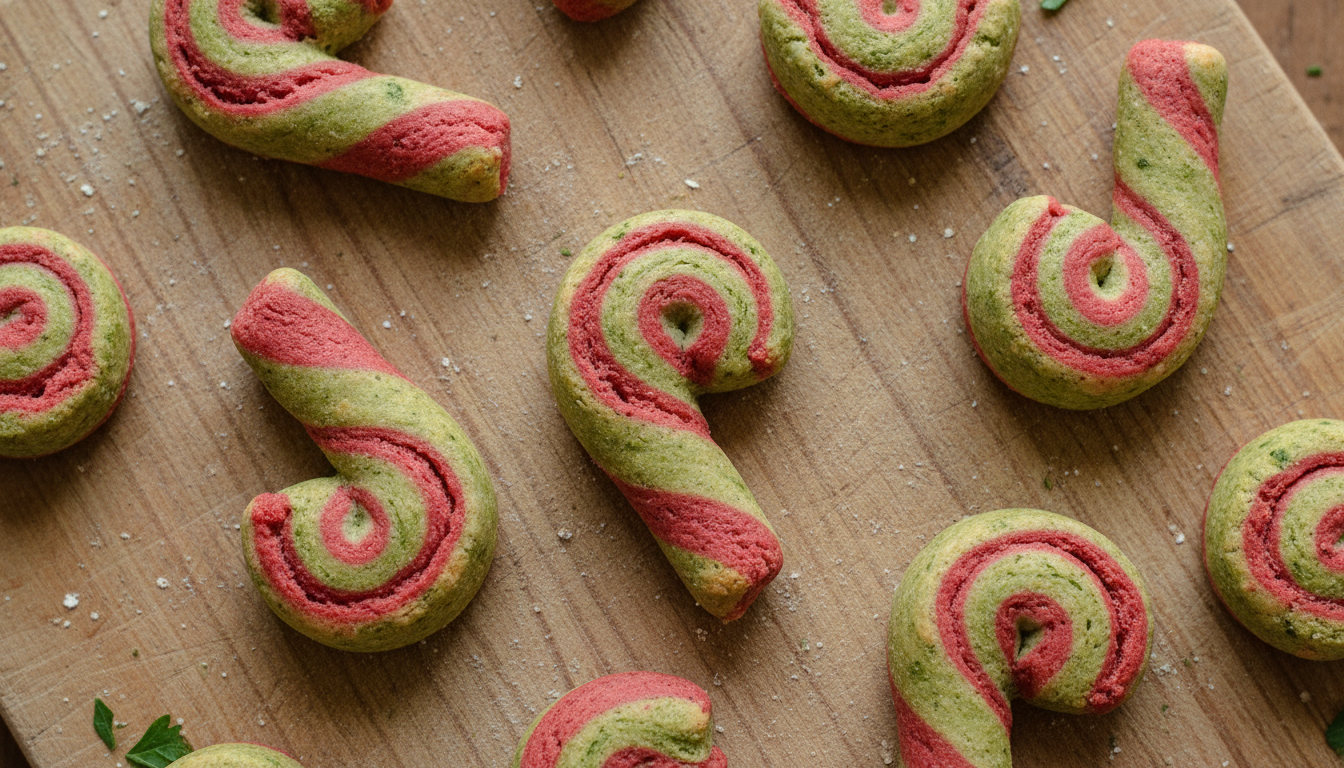

These festive Candy Cane Chews are a fun way to get your dog into the holiday spirit! With their naturally red-and-green swirls, they're a dog-friendly alternative to traditional Christmas candy canes. Made with parsley, spinach, and beetroot, these treats skip the peppermint, sugar, and artificial coloring, providing a safe treat for your dog this holiday season.
Why This Recipe Works
These Candy Cane Chews are not only visually appealing but also offer flavors and textures your dog will love. The base dough is made with oat flour, which helps create a rollable and shapeable texture perfect for forming candy cane shapes. Parsley adds a fresh herbal aroma, while spinach contributes to the green color. Beetroot naturally colors the dough with a pink-red hue. Although these ingredients are chosen for their appearance and flavor, it's important to note that they don't act as a dental treatment or breath freshener.
What You'll Need
Ingredients
Base Dough:
- 1 cup (100 g) oat flour
- 1 large egg (note: raw eggs can be a concern for immunocompromised dogs)
- 2 tbsp (30 g) plain, unsweetened applesauce
- 1–3 tsp water, only if needed
Green Dough:
- 1 tbsp finely chopped fresh parsley
- 1 tbsp finely chopped fresh spinach
Red Dough:
- 1–2 tsp cooked beetroot purée
Equipment
- Baking sheet
- Parchment paper
- Mixing bowls
- Spoon
- Knife or dough cutter
- Oven
Making this for your dog?
Save it in WellWhisker and get a serving size made for your pet.
Get StartedStep-by-Step Instructions
- Preheat Your Oven: Start by preheating your oven to 325°F (165°C). Line a baking sheet with parchment paper to prevent sticking.
- Prepare the Base Dough: In a mixing bowl, combine the oat flour, egg, and applesauce. Mix until a soft dough forms. The dough should be firm enough not to stick excessively. If needed, add 1–3 teaspoons of water to adjust the consistency.
- Divide the Dough: Split the base dough into two equal portions to prepare for coloring.
- Create the Green Dough: Blend or finely chop the parsley and spinach. Knead these greens into one half of the dough until they're evenly distributed.
- Make the Red Dough: Knead the beetroot purée into the other half of the dough. If the dough becomes sticky, sprinkle in a little extra oat flour to return it to the right consistency.
- Shape the Candy Canes: Take small pieces of each dough and roll them into thin ropes about ¼ inch (6 mm) thick. Place a green and a red rope side by side, gently twist them together, and curve one end to form a candy cane shape.
- Bake the Treats: Place the candy canes on the prepared baking sheet and bake for 18–25 minutes, until they're firm and cooked through.
- Optional Drying: For a firmer texture, reduce the oven temperature to 225°F (105°C) and dry the chews for an additional 15–30 minutes, checking regularly.
- Cool Completely: Let the chews cool completely before serving them to your dog.
Freezing & Storage
Store these Candy Cane Chews in an airtight container in the refrigerator for up to 3–4 days. For longer storage, you can freeze them for up to 2 months. When you're ready to serve, simply thaw them as needed.
Serving Guide
- Small Dogs (under 20 lbs): Offer a small piece or half a candy cane.
- Medium Dogs (20-50 lbs): Serve one candy cane.
- Large Dogs (50+ lbs): Offer one to two candy canes.
These treats are perfect for an occasional festive surprise. Consider giving them after a walk or during quiet time at home.
Safety Notes
- Always supervise your pet while they're enjoying treats.
- Treats should make up no more than 10% of your pet's daily calorie intake.
- Introduce new ingredients one at a time to watch for any adverse reactions.
- For dogs prone to urinary oxalate stones, consult your veterinarian before offering treats with spinach or beetroot.
- Persistent bad breath can indicate dental issues; these treats aren't a substitute for brushing or professional dental care.
- Check peanut butter for xylitol if used in any variation.
Make It Easier / Harder
- Easier Version: If you're new to making dog treats, mix the green and red doughs together for a marbled effect instead of twisting ropes.
- Harder Version: For a more complex challenge, try rolling the ropes thinner and creating smaller, more intricate candy cane shapes.
- Advanced Enrichment: Add a few pieces of kibble inside the dough before twisting to add a bit more interest for your dog.
Frequently Asked Questions
What if my dough is too sticky?
If your dough feels sticky, try adding a bit more oat flour until it reaches a workable consistency. If it's cracking, knead in a few drops of water.
Can I use other flours instead of oat flour?
Oat flour is preferred for its texture and nutritional profile, but you can experiment with whole wheat flour if your dog doesn't have sensitivities.
How long do these treats last?
These treats last 3–4 days in the refrigerator or up to 2 months in the freezer. Be sure to store them in an airtight container.
Can I substitute the parsley or spinach?
For the best color and flavor, it's recommended to stick with parsley and spinach, but you can experiment with other dog-safe greens if needed.
Key Takeaways
- These Candy Cane Chews are festive, dog-safe treats perfect for the holidays.
- Made with oat flour, parsley, spinach, and beetroot for natural colors and flavors.
- Easy to make at home with simple ingredients and equipment.
- Store in the fridge or freezer for extended freshness.
- Always supervise your dog when enjoying these treats, and introduce new ingredients gradually.
Save this recipe for later
Keep the recipes your dog loves in one place, find new ones every week, and import the ones you find anywhere else. WellWhisker sizes every serving for your pet.
Want more like this? see every homemade dog treat recipe in one place. Also in: christmas treats.
This post contains affiliate links. If you purchase through these links, we may earn a small commission at no extra cost to you. This helps us keep creating free recipes for pet parents everywhere.
Disclaimer
This recipe is for supplemental feeding and enrichment only, not a meal replacement. Every pet is different. If your pet has food allergies, sensitivities, or health conditions, consult your veterinarian before introducing new foods. WellWhisker provides general wellness information and is not a substitute for professional veterinary advice.