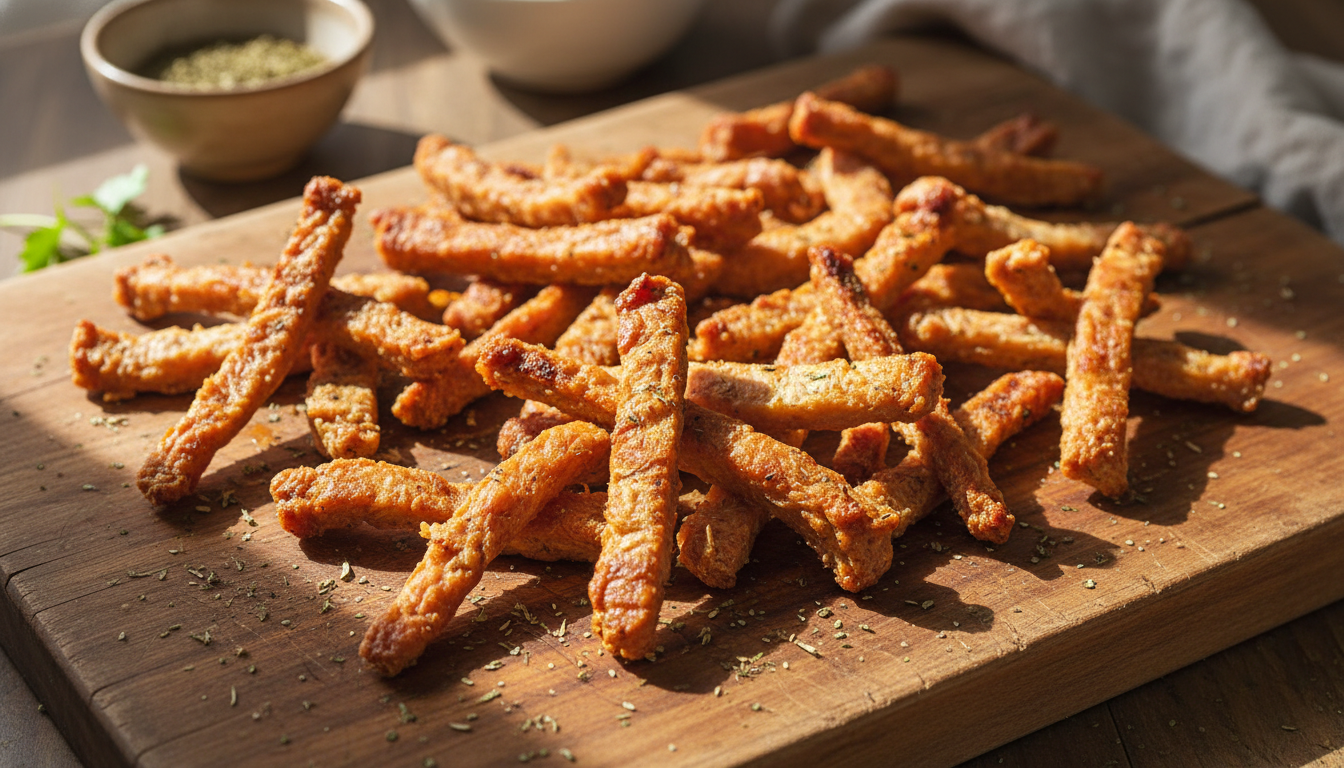

Welcome to the world of homemade dog treats with our Baked Chicken Jerky Dog Treats! These high-protein snacks are not only simple to make but also offer a nutritious option for your dog. Dogs love the chewy texture and savory flavor of chicken jerky, making it an excellent treat for training sessions, rewarding good behavior, or just showing a little extra love.
Why This Recipe Works
Enrichment through treats is a fantastic way to engage your dog's senses and provide them with mental stimulation. Our Baked Chicken Jerky Dog Treats offer the enrichment of a tasty challenge. The chewy consistency requires your dog to work a little harder than they would with regular kibble or softer treats, providing both physical and mental exercise.
Chicken is a lean protein source that many dogs find irresistible. It supports muscle maintenance and energy levels, making it ideal for active pups. Moreover, by making jerky at home, you control the ingredients, ensuring there are no added preservatives or unnecessary fillers. This recipe uses just a few simple ingredients, focusing on safety and health.
An added bonus is the irresistible aroma that fills your kitchen as these treats bake. This sensory experience can be stimulating for your dog even before they get to taste the treat. The anticipation builds as the savory scent wafts through the air, making it an enriching experience from start to finish.
What You'll Need
Ingredients
- 2-3 boneless, skinless chicken breasts
- 1 tablespoon coconut oil (melted)
- 1 teaspoon turmeric (optional, small amounts for anti-inflammatory benefits)
- 1 tablespoon parsley (fresh, finely chopped)
Equipment
- Sharp knife
- Baking sheet
- Parchment paper
- Oven
- Cooling rack
Making this for your dog?
Save it in WellWhisker and get a serving size made for your pet.
Get StartedStep-by-Step Instructions
- Preparation: Preheat your oven to 200°F (93°C). Line a baking sheet with parchment paper to prevent sticking.
- Slice the Chicken: Using a sharp knife, slice the chicken breasts into thin strips, about 1/8 to 1/4 inch thick. The thinner the slice, the quicker it will dehydrate in the oven.
- Season the Chicken: In a bowl, combine the melted coconut oil, turmeric, and parsley. Toss the chicken strips in this mixture until they are evenly coated. This step adds a touch of flavor and beneficial nutrients.
- Arrange on Baking Sheet: Lay the chicken strips out on the prepared baking sheet. Make sure they are not overlapping to ensure even cooking.
- Bake: Place the baking sheet in the oven and bake for 2-3 hours. Check the jerky every hour. The chicken should be dry and firm to the touch, with no remaining moisture.
- Cool: Once done, remove the jerky from the oven and let it cool on a cooling rack. This step is crucial to ensure the jerky becomes completely dry, preventing spoilage.
- Store: After cooling, store the jerky in an airtight container. For longer storage, keep it in the refrigerator or freeze it for up to two months.
Freezing & Storage
- Refrigerator: Store in an airtight container for up to two weeks.
- Freezer: Freeze in an airtight container or freezer bag for up to two months.
- Tip: Always cool the jerky thoroughly before storage to prevent moisture buildup, which can lead to spoilage.
Serving Guide
- Under 20 lbs: 1-2 small pieces per day.
- 20-50 lbs: 2-3 medium pieces per day.
- 50+ lbs: 3-4 large pieces per day.
Best time to serve these treats is during training sessions, as a reward after a walk, or when you need to keep your dog occupied for a while. Remember that treats should make up no more than 10% of your dog's daily calorie intake.
Safety Notes
- Introduce Ingredients Gradually: If your dog hasn't had chicken or any of the other ingredients before, introduce them slowly to monitor for any adverse reactions.
- Supervision Recommended: Always supervise your dog when they are enjoying these chewy treats to prevent choking.
- Allergy Alert: Some dogs may be sensitive to chicken or turmeric. Watch for any signs of allergies such as itching or digestive upset.
Make It Easier / Harder
- Easier Version: Skip the seasoning and bake plain chicken strips. This reduces preparation time.
- Harder Version: For advanced enrichment, try slicing the chicken thicker and baking it longer for a tougher chew. This will require more effort from your dog to enjoy.
Frequently Asked Questions
How do I know when the chicken jerky is done?
The jerky is done when it is dry, firm, and no longer pliable. It should snap easily when bent.
Can I use other meats for this recipe?
Yes, other lean meats like turkey or beef can be used, but cooking times may vary based on thickness and moisture content.
Is it necessary to use turmeric and parsley?
No, these are optional. They add flavor and potential health benefits but can be omitted if your dog is sensitive to them.
How long does homemade chicken jerky last?
When stored properly in the refrigerator, it should last up to two weeks. For longer storage, freezing is recommended.
Key Takeaways
- High-protein, low-fat treat for dogs of all sizes.
- Homemade jerky allows for ingredient control and eliminates preservatives.
- Baking at a low temperature ensures safety and preserves nutrients.
- Great for training sessions and as an enrichment tool.
- Monitor your dog for any allergic reactions to new ingredients.
Save this recipe for later
Keep the recipes your dog loves in one place, find new ones every week, and import the ones you find anywhere else. WellWhisker sizes every serving for your pet.
Want more like this? Browse all our baked treats, or see every homemade dog treat recipe in one place.
This post contains affiliate links. If you purchase through these links, we may earn a small commission at no extra cost to you. This helps us keep creating free recipes for pet parents everywhere.
Disclaimer
"This recipe is for supplemental feeding and enrichment only, not a meal replacement. Every pet is different. If your pet has food allergies, sensitivities, or health conditions, consult your veterinarian before introducing new foods. WellWhisker provides general wellness information and is not a substitute for professional veterinary advice."
Looking for more recipes like this? WellWhisker's Recipe Lab has a growing library of enrichment recipes tailored to your pet. Try it free at wellwhisker.app