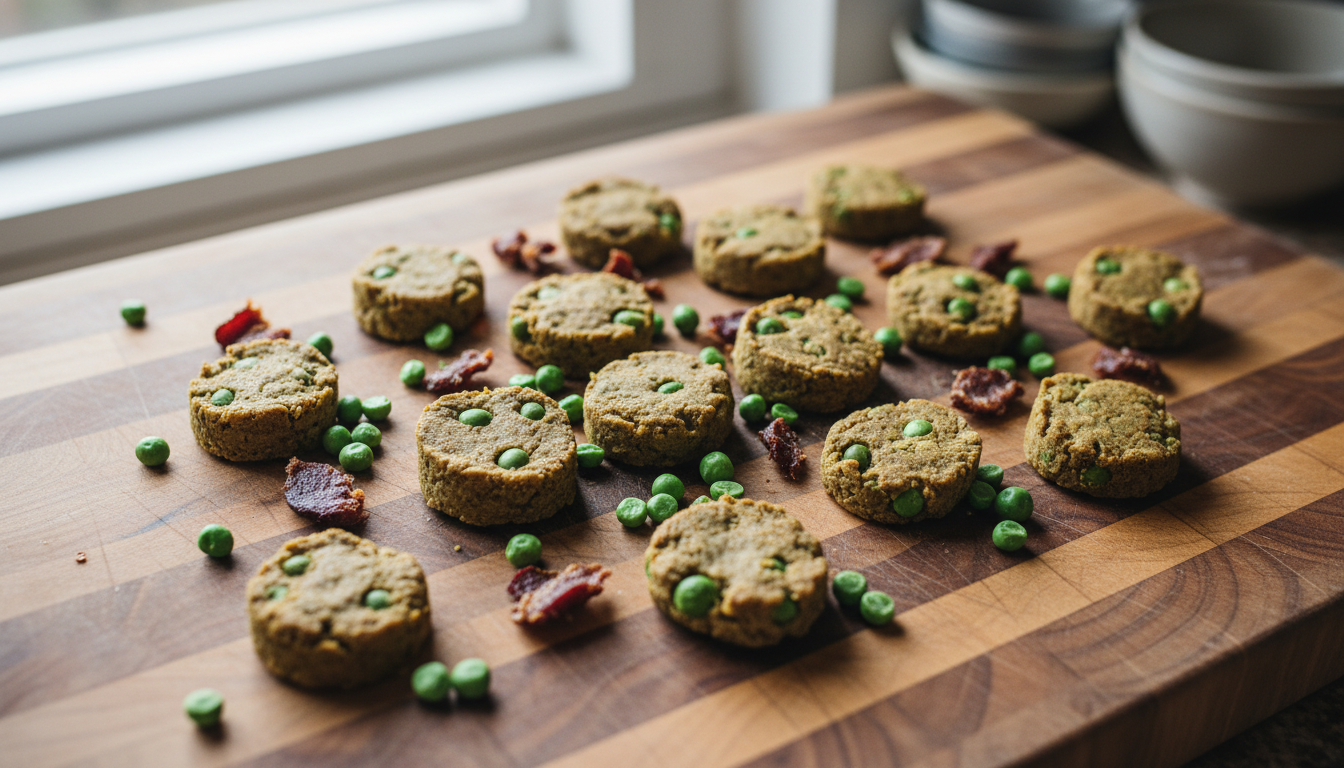

Scatter feeding is an engaging and straightforward way to stimulate your dog’s natural hunting instincts and provide mental enrichment. This DIY enrichment activity focuses on using duck and peas, two nutritious ingredients that are sure to captivate your dog’s senses. Whether your dog is an experienced puzzle solver or just starting out, scatter feeding is a fun and interactive way to make mealtime more exciting.
Why This Recipe Works
Scatter feeding taps into your dog’s innate foraging behavior, transforming a routine meal into an adventurous search. By sprinkling small portions of food across an area, you encourage your dog to use its nose and brain to locate each morsel. This not only slows down eating, which can aid digestion, but also provides mental stimulation and physical exercise.
The choice of duck and peas as the main ingredients adds a unique twist to this enrichment activity. Duck is a rich source of protein and iron, making it an excellent choice for dogs with sensitivities to more common proteins. It's also packed with essential amino acids and offers a distinct flavor that many dogs find irresistible. Peas, on the other hand, are a fantastic source of fiber, vitamins A, C, and K, and offer additional protein. They add a delightful crunch and a hint of sweetness to the mix, making this scatter feeding session both nutritious and enticing.
By incorporating these ingredients, you’re not only enhancing the flavor profile but also providing a balanced mix of nutrients that contribute to your dog’s overall health. The combination of duck and peas ensures that this enrichment activity is as beneficial as it is enjoyable.
What You'll Need
Ingredients
- 1 cup cooked duck, shredded
- 1/2 cup cooked peas, cooled
- 1/4 cup cooked quinoa
- 1 tablespoon flaxseed (ground)
- 1 teaspoon olive oil (small amounts)
- Fresh parsley, finely chopped (optional, for garnish)
Equipment
- Baking sheet or large tray (for preparation)
- Silicone baking mat (optional, to prevent sticking)
- Measuring cups
- Mixing bowl
- Spoon or spatula
- Outdoor or indoor space for scattering
Making this for your dog?
Save it in WellWhisker and get a serving size made for your pet.
Get StartedStep-by-Step Instructions
- Prepare Ingredients: Begin by cooking the duck and peas if you haven't already. Make sure they're thoroughly cooked and allowed to cool. You can cook the duck by boiling or baking it until it reaches an internal temperature of 165°F. For peas, a quick boil until tender will do.
- Mix Ingredients: In a mixing bowl, combine the shredded duck, cooked peas, cooked quinoa, ground flaxseed, and olive oil. Stir until the mixture is well combined. The texture should be crumbly yet moist enough to hold together in small clumps.
- Add Parsley: If using parsley, add it to the mixture. Parsley not only freshens breath but also adds a touch of flavor and color. Mix gently to distribute evenly.
- Spread Out Mixture: Use a spoon or your hands to spread the mixture across a baking sheet or large tray lined with a silicone mat. This will make it easier to portion out when scattering.
- Begin Scatter Feeding: Choose your scatter feeding area. This could be a patch of grass in your backyard, a section of your living room, or any safe space where your dog can roam and search. Start by scattering small handfuls of the mixture evenly across the area.
- Engage Your Dog: Bring your dog to the area and encourage them to sniff out the food. You might need to show them the first few bits to get them started. Watch as they engage their nose and mind to track down each piece.
- Adjust as Needed: Depending on your dog's experience with scatter feeding, you may need to adjust the size of the area or the amount of food scattered to match their comfort level and challenge them appropriately.
Freezing & Storage
While scatter feeding is a fresh activity best done at mealtime, you can prepare the duck and peas mixture in advance. Store any unused portions in an airtight container in the refrigerator for up to three days. If you wish to prepare larger batches, freeze in portions, and thaw before scattering.
Serving Guide
- Under 20 lbs: Use about 1/4 cup of the mixture.
- 20-50 lbs: Use about 1/2 cup of the mixture.
- 50+ lbs: Use about 3/4 cup of the mixture.
Scatter feeding can be done once or twice a day, depending on your dog's feeding schedule. It’s an excellent activity to engage your dog before leaving the house or to break up a long afternoon.
Safety Notes
- Always supervise your pet during scatter feeding to ensure they’re not eating anything they shouldn’t.
- Be mindful of the environment. Avoid areas with hazardous materials or small objects that could be ingested.
- Treats should make up no more than 10% of your pet's daily calorie intake.
- Introduce new ingredients one at a time to monitor for potential allergic reactions or sensitivities.
Make It Easier / Harder
- For Beginners: Confine the scatter feeding to a smaller area to make it easier for your dog to find the food. You can also start by placing the food in small piles rather than scattering it widely.
- For Advanced Enrichment: Increase the size of the area and scatter the food more sparsely. You can also hide some pieces under leaves or within safe toys to increase the challenge.
- Add Variety: Incorporate small amounts of other safe vegetables or fruits like carrots or blueberries to keep your dog guessing and engaged.
Frequently Asked Questions
What if my dog doesn’t seem interested in scatter feeding?
Start by using highly aromatic ingredients and show your dog the first few pieces to get them interested. You can also try using their favorite treats mixed in to spark interest.
Can I use other proteins instead of duck?
Yes, you can substitute with other dog-safe proteins like chicken, turkey, or beef if your dog has a preference or dietary restriction.
Is scatter feeding suitable for puppies?
Absolutely! Scatter feeding can be a great way to engage the natural curiosity of puppies. Just ensure the ingredients are appropriate for their size and age, and adjust the portion size accordingly.
How often should I do scatter feeding?
You can incorporate scatter feeding into your dog's routine as often as you like, ideally once a day or a few times a week, depending on how your dog enjoys it.
Key Takeaways
- Scatter feeding stimulates natural foraging behavior, offering mental and physical enrichment.
- Duck and peas provide a nutritious, flavorful mix that many dogs love.
- Adjust the difficulty of scatter feeding based on your dog’s experience.
- Always supervise your dog during enrichment activities.
- Store leftovers in the fridge for up to three days or freeze for later use.
Save this recipe for later
Keep the recipes your dog loves in one place, find new ones every week, and import the ones you find anywhere else. WellWhisker sizes every serving for your pet.
Want more like this? Browse all our enrichment ideas, or see every homemade dog treat recipe in one place.
This post contains affiliate links. If you purchase through these links, we may earn a small commission at no extra cost to you. This helps us keep creating free recipes for pet parents everywhere.
Disclaimer
This recipe is for supplemental feeding and enrichment only, not a meal replacement. Every pet is different. If your pet has food allergies, sensitivities, or health conditions, consult your veterinarian before introducing new foods. WellWhisker provides general wellness information and is not a substitute for professional veterinary advice.
Looking for more recipes like this? WellWhisker's Recipe Lab has a growing library of enrichment recipes tailored to your pet. Try it free at wellwhisker.app