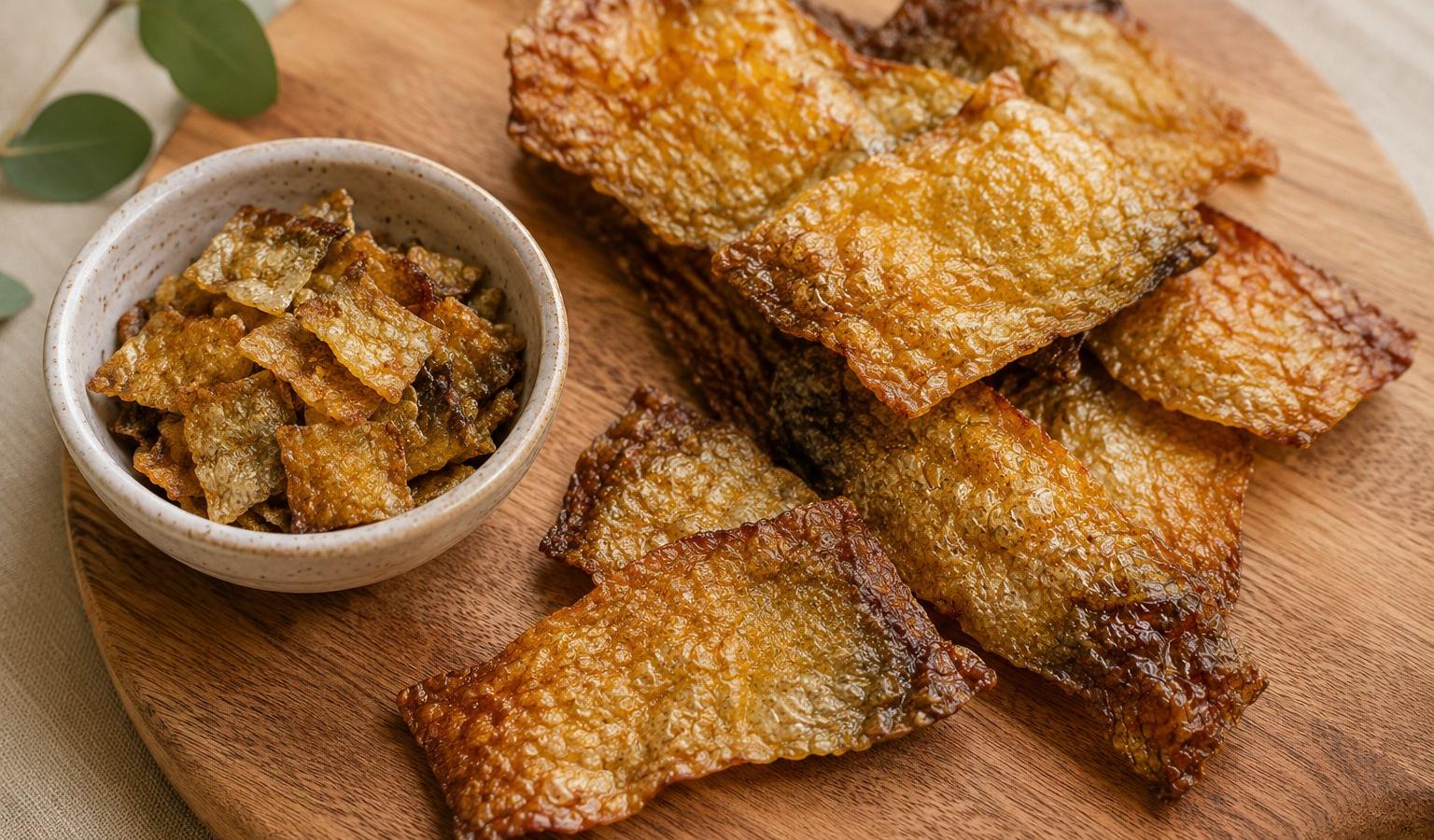

If you've ever wondered how to turn leftovers from your own kitchen into a delightful treat for your dog, Crunchy Salmon Skin Chips are a perfect solution. These baked or dehydrated treats are not only high in omega-3 fatty acids, but they also provide a satisfying crunch that dogs absolutely love. Whether you choose to use your oven or a dehydrator, this recipe transforms salmon skin into a high-value treat that’s as nutritious as it is delicious.
Why This Recipe Works
Crunchy Salmon Skin Chips are a fantastic enrichment option for several reasons. First, they utilize a single ingredient: salmon skin, which makes them an excellent choice for dogs with dietary sensitivities. The natural oils in salmon skin are rich in omega-3 fatty acids, which many vets recommend for promoting healthy skin and a shiny coat. These oils can also support joint health and reduce inflammation.
Another benefit of these treats is their texture and flavor. Dogs are naturally drawn to the smell of fish, and the crispy texture of the baked or dehydrated skin provides a satisfying crunch that can be a great sensory enrichment. Plus, these chips are perfect for dogs that need high-value treats for training or special occasions.
What You'll Need
Ingredients
- Salmon skin only, fully descaled if needed
Equipment
- Oven or dehydrator
- Parchment paper (if using an oven)
- Baking sheet (if using an oven)
- Dehydrator trays (if using a dehydrator)
- Paper towels
- Sharp knife
Making this for your dog?
Save it in WellWhisker and get a serving size made for your pet.
Get StartedStep-by-Step Instructions
Oven Method
- Preheat and Prepare: Preheat your oven to 250°F (120°C). Line a baking sheet with parchment paper to prevent sticking.
- Dry the Skin: Pat the salmon skin very dry using paper towels. This step is crucial to ensure the skin crisps up rather than steams.
- Check for Bones: Carefully inspect the skin for any bones or sharp pieces and remove them to ensure safety.
- Cut the Skin: Using a sharp knife, cut the salmon skin into strips or small squares. Adjust the size based on your dog’s size, smaller pieces for smaller dogs.
- Arrange and Bake: Place the skin pieces skin-side down on the prepared baking sheet in a single layer. Bake for 45–75 minutes, flipping halfway through. The exact time depends on the thickness of the skin; they should be dry, crisp, and no longer soft or rubbery.
- Cool Completely: Allow the chips to cool completely on a wire rack. They will crisp up further as they cool.
Dehydrator Method
- Dry the Skin: Pat the salmon skin dry and ensure all bones and scales are removed.
- Cut and Arrange: Slice the skin into strips or bite-sized pieces and arrange them in a single layer on dehydrator trays.
- Dehydrate: Set your dehydrator to 145°F (63°C) and let the skins dry for 6–10 hours. They should be fully dry and crunchy. For a more chip-like texture, continue dehydrating until they snap when bent.
- Cool and Store: Let the chips cool completely before storing to maintain their crispness.
Freezing & Storage
Due to the oily nature of salmon skin, these treats require careful storage.
- Oven-baked: Store in an airtight container in the fridge for 5–7 days. For longer storage, freeze them for up to 2 months.
- Fully dehydrated: When crisp, store airtight in the fridge for up to 2 weeks, or freeze for 2–3 months.
Avoid long-term room temperature storage, as fish oils can become rancid.
Serving Guide
- Portion Sizes:
- Dogs under 20 lbs: 1–2 small chips
- Dogs 20–50 lbs: 2–4 medium chips
- Dogs 50+ lbs: 4–6 chips, depending on size
- Frequency: Offer these treats occasionally, not daily. They are rich and should complement your dog's regular diet without exceeding 10% of their daily caloric intake.
Safety Notes
- Avoid Raw Salmon: Always use cooked salmon skin; raw salmon poses a risk of parasites.
- Plain Only: Ensure the skin is free from any seasonings, particularly garlic, onion, salt-heavy seasoning, or butter.
- Monitor Portion Size: Due to their richness, keep portions small, especially for dogs with sensitive stomachs or prone to pancreatitis.
- Supervise Treat Time: Always supervise your pet when they are enjoying these treats.
Make It Easier / Harder
- For Beginners: Start with larger pieces that are easier for your dog to handle. You can bake them until just crispy for an easier texture to chew.
- For Advanced Enrichment: Slice the skin thinner and bake or dehydrate until very crisp. You can also hide the chips in puzzle toys for added challenge.
Frequently Asked Questions
How do I know when the salmon skin is done?
The skin should be completely dry, crisp, and should not feel rubbery. It will crisp up further as it cools.
Can I use any type of salmon skin?
Yes, but ensure it's from a high-quality source and is plain, without any seasonings or additives.
Is this treat suitable for all dogs?
While most dogs will love these treats, they are best used in moderation, especially for dogs with dietary restrictions or health conditions.
Key Takeaways
- Single-ingredient treat rich in omega-3 fatty acids
- Can be baked or dehydrated for a crunchy texture
- Perfect as a high-value training reward
- Must be stored properly due to fish oils
- Suitable for occasional treats, not as a meal replacement
Save this recipe for later
Keep the recipes your dog loves in one place, find new ones every week, and import the ones you find anywhere else. WellWhisker sizes every serving for your pet.
Want more like this? see every homemade dog treat recipe in one place.
This post contains affiliate links. If you purchase through these links, we may earn a small commission at no extra cost to you. This helps us keep creating free recipes for pet parents everywhere.
Disclaimer
"This recipe is for supplemental feeding and enrichment only, not a meal replacement. Every pet is different. If your pet has food allergies, sensitivities, or health conditions, consult your veterinarian before introducing new foods. WellWhisker provides general wellness information and is not a substitute for professional veterinary advice."
Looking for more recipes like this? WellWhisker's Recipe Lab has a growing library of enrichment recipes tailored to your pet. Try it free at wellwhisker.app