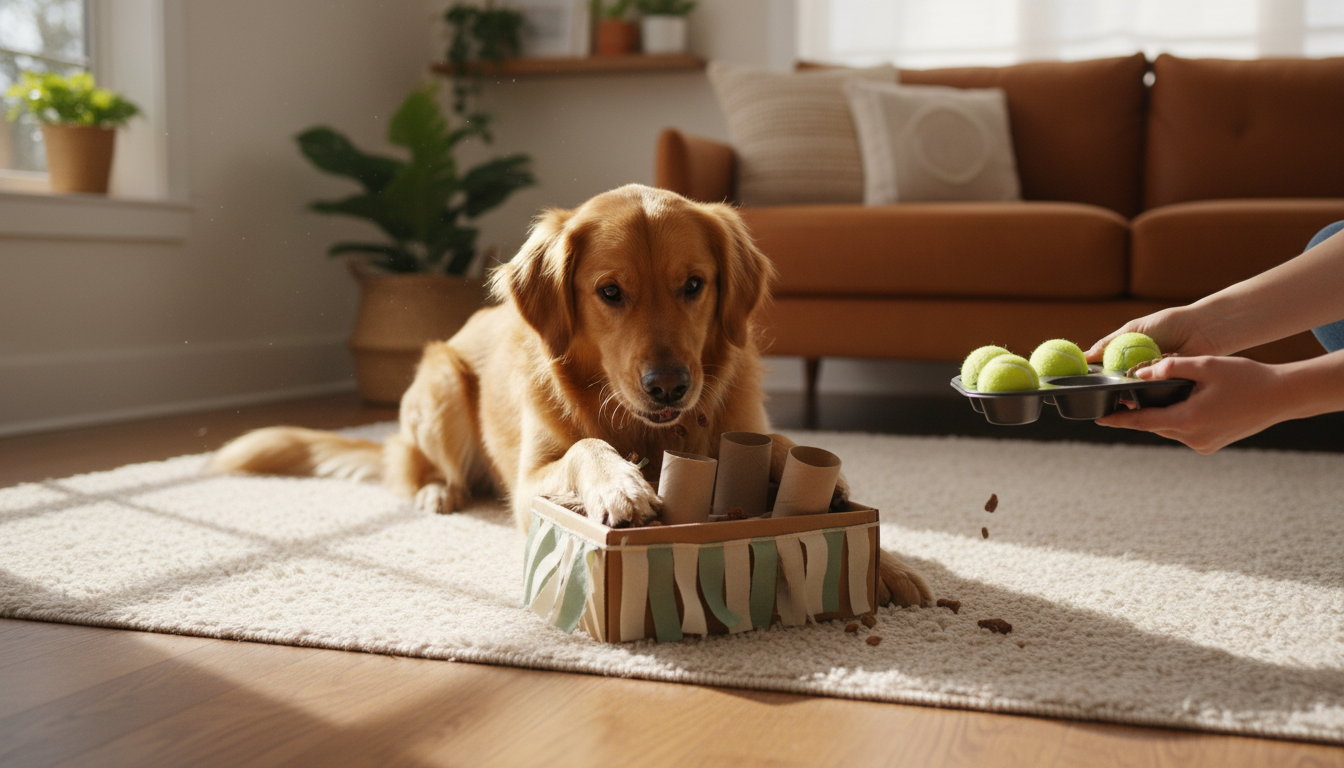
Homemade Dog Puzzle Toys: Fun and Enriching Experience
Discover how homemade dog puzzle toys can keep your pet entertained and mentally stimulated. Learn to create engaging DIY toys tailored to your dog's needs.
If you're searching for a way to keep your dog mentally stimulated while also providing them with hours of entertainment, homemade dog puzzle toys might be just what you need. These DIY toys are not only cost-effective but also allow you to tailor the challenge to your pet's preferences and abilities. Homemade puzzle toys can turn a regular day into an adventure for your dog, making meal times more engaging and reducing unwanted behaviors resulting from boredom.
Why Puzzle Toys Are Important
Dogs are naturally curious creatures. They thrive on mental stimulation, and without it, they can become bored, leading to behaviors like chewing on furniture or excessive barking. Puzzle toys serve as an excellent outlet for this energy. They challenge your dog’s problem-solving skills and can be adjusted in difficulty as your pet becomes more adept. According to the American Kennel Club (AKC), mentally stimulating activities can improve your dog's cognitive functions and even delay the onset of cognitive dysfunction in older dogs.
Materials You Can Use
Creating homemade dog puzzle toys doesn’t require a trip to a specialty store. You likely have many of the materials you need right at home. Here’s a list of common household items you can repurpose:
- Tennis Balls: Cut a slit and insert treats to encourage your dog to figure out how to retrieve them.
- Plastic Bottles: Remove the cap, insert treats, and let your dog roll it around.
- Old Towels: Roll them up with treats inside to create a snuffle mat.
- Cardboard Boxes: Use them as hidden compartments for treats.
- PVC Pipes: Drill holes and insert treats for a durable option.
When choosing materials, ensure they’re pet-safe. Avoid small parts that could pose a choking hazard and materials that can easily splinter or break.
Simple DIY Puzzle Toy Ideas
### 1. The Tennis Ball Treat Dispenser Cut a small slit in a tennis ball and fill it with your dog’s favorite treats. The ball will bounce around unpredictably, and your dog will need to figure out how to manipulate it to get the treats out. This simple toy can be made more challenging by adjusting the size of the slit or using different types of treats.
### 2. The Bottle Spinner Take a plastic bottle, remove the cap, and fill it with kibble or small treats. Your dog will have to push the bottle around to make the treats fall out. This toy is great for dogs who love to bat things around with their paws or nose.
### 3. The Snuffle Mat Use an old towel or fleece blanket. Roll it up loosely and tuck treats inside as you go. Your dog will love sniffing out the treats and unrolling the mat to find them. This toy taps into your dog's natural foraging instincts and can keep them occupied for a good amount of time.
### 4. Cardboard Box Puzzles Hide treats in a cardboard box, then close it up. Your dog will have to figure out how to get inside. For an added challenge, place smaller boxes inside the larger one, each containing a treat.
### 5. PVC Pipe Puzzle Cut a PVC pipe into a manageable length and drill holes around it. Fill it with treats, and let your dog roll it around. The treats will fall out sporadically, keeping your dog engaged.
Benefits of Homemade Puzzle Toys
Creating your own dog puzzle toys has numerous benefits beyond just saving money. These toys can be customized to suit your dog’s personality and skill level. A study published in the Journal of Veterinary Behavior highlights that enrichment activities like puzzle toys can significantly reduce stress-related behaviors in dogs.
Moreover, making toys at home allows you to experiment with different designs and materials, which can be especially useful if your dog gets bored quickly. You can easily swap out materials and designs to keep things fresh and exciting.
Tips for Introducing Puzzle Toys
Introducing puzzle toys to your dog requires some strategy to ensure they’re effective and enjoyable:
- Start Simple: Begin with easy puzzles to build your dog’s confidence. Once they understand the concept, gradually increase the difficulty.
- Use High-Value Treats: To motivate your dog, use treats they really love. This will encourage them to engage with the toy.
- Supervise Playtime: Especially at the beginning, watch your dog play to ensure they’re not getting frustrated or chewing on the puzzle toy dangerously.
- Encourage and Praise: Celebrate your dog’s successes with praise and affection. This positive reinforcement will make them more eager to participate.
Frequently Asked Questions
How can I make a dog puzzle toy more challenging?
You can increase the difficulty by using smaller treats, adding more obstacles, or creating multi-step puzzles. For example, place a treat inside a small box, then put that box inside a larger one.
Are there any safety concerns with homemade puzzle toys?
Always use non-toxic materials and ensure that no small parts can be easily swallowed. Supervise your dog during playtime to prevent any accidents.
Can puzzle toys help with separation anxiety?
Many experts, including those from the ASPCA, suggest that puzzle toys can help alleviate separation anxiety by keeping your dog mentally stimulated and distracted.
How often should I give my dog puzzle toys?
Incorporate puzzle toys into your dog’s daily routine to keep things interesting. Rotate toys to maintain novelty and engagement.
What if my dog loses interest in the puzzle toy?
Try switching up the treats or creating a different puzzle. Sometimes, adding a bit of peanut butter or a stronger-smelling treat can reignite your dog’s interest.
Key Takeaways
- Puzzle toys are essential for mental stimulation and can prevent unwanted behaviors.
- You can make puzzle toys from common household items like tennis balls and cardboard boxes.
- Start with simple designs and gradually increase the complexity to maintain your dog's interest.
- Ensure all materials are safe and supervise your dog while they play.
- Puzzle toys can be a great tool for managing separation anxiety and stress.
Sources
- ASPCA Animal Poison Control
- AKC - Dog Nutrition
- PetMD - Dog Nutrition
- VCA Animal Hospitals
- Merck Veterinary Manual
- Tufts Veterinary Nutrition
---
This article is for informational purposes only and is not a substitute for professional veterinary advice, diagnosis, or treatment. Always consult your veterinarian before making changes to your pet's diet or health routine. WellWhisker does not provide veterinary medical advice.
Try WellWhisker
Homemade treat recipes, ingredient scanner, and wellness tools, personalized for your pet.
Get Started