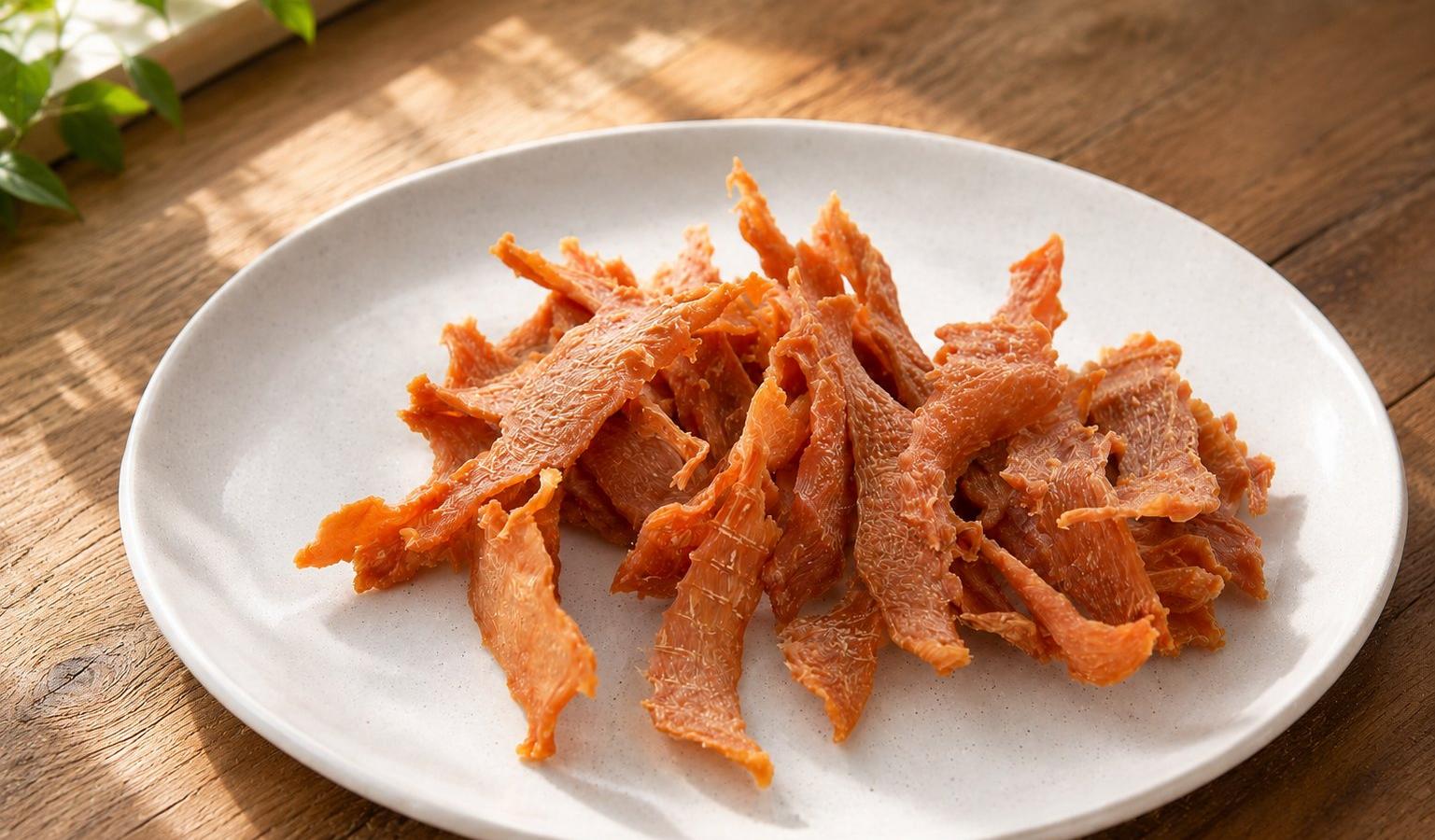

If your dog loves meaty snacks, this homemade chicken jerky is bound to become their new favorite treat. Perfect for training sessions or as a high-value reward, this single-ingredient recipe is both simple and nutritious. Plus, with no added sugars, salts, or preservatives, it's an excellent choice for health-conscious pet owners looking to provide quality snacks. Whether you choose to use your oven or a dehydrator, this recipe is straightforward and rewarding.
Why This Recipe Works
Chicken jerky for dogs is a wonderful combination of simplicity and nutrition. The single-ingredient nature ensures there are no hidden additives that could upset your dog's stomach or contribute to long-term health issues. Many veterinarians recommend high-protein treats like chicken jerky because they support muscle health and provide essential nutrients without unnecessary fillers.
Nutritional Benefits
Chicken is an excellent source of lean protein, which is crucial for maintaining strong muscles and supporting overall growth and development in dogs. It's also rich in essential amino acids that aid in tissue repair and boost the immune system. Moreover, chicken contains a good amount of B vitamins, which play a role in energy production, making it a great choice for active dogs.
Special Features
This recipe is incredibly versatile. You can easily customize the texture of the jerky to suit your dog's preferences by adjusting the direction of your cuts. Cutting with the grain results in chewier jerky, while cutting against the grain gives softer pieces. This adaptability makes it suitable for dogs of all ages and dental health statuses.
What You'll Need
Ingredients
- 1–2 boneless, skinless chicken breasts
Equipment
- Sharp knife
- Cutting board
- Baking sheet with wire rack, or dehydrator
- Parchment paper (optional)
Making this for your dog?
Save it in WellWhisker and get a serving size made for your pet.
Get StartedStep-by-Step Instructions
- Prepare the Chicken: Begin by patting the chicken dry with a paper towel. This step is crucial to remove excess moisture, which can prolong drying time.
- Trim the Fat: Carefully trim away any visible fat. Fat can spoil quickly and affect the shelf life of your jerky.
- Slice the Chicken: Use your sharp knife to cut the chicken into thin strips, about ⅛–¼ inch thick. Choose your cutting direction based on the desired texture: with the grain for chewier jerky, against the grain for softer pieces.
- Arrange the Strips: Lay the strips in a single layer on your baking sheet or dehydrator tray. Ensure there is space between each piece to allow for even drying.
Dehydrator Method
- Set your dehydrator to 160°F / 71°C.
- Dehydrate the chicken strips for 6–10 hours, checking occasionally. The jerky is ready when it is fully dry, firm, and no longer sticky.
Oven Method
- Preheat your oven to 250°F / 120°C.
- Place the chicken strips on a wire rack over a baking sheet to allow air circulation.
- Bake for about 2–3 hours, flipping halfway through. Ensure the internal temperature of the chicken reaches 165°F / 74°C for safety.
Freezing & Storage
Once the jerky is completely cool, store it in an airtight container. It will keep in the refrigerator for up to 1 week. For longer storage, you can freeze the jerky, which helps maintain its freshness for several months.
Serving Guide
- Small dogs: ½–1 small strip
- Medium dogs: 1 strip
- Large dogs: 1–2 strips
For training purposes, break the strips into smaller, bite-sized pieces. Always supervise your dog when they are enjoying jerky, especially if they have a tendency to gulp their treats.
Safety Notes
- Use plain chicken only, avoiding any seasoning, onion, garlic, salt, marinades, or sauces.
- Ensure the chicken reaches an internal temperature of 165°F / 74°C before it is dried completely to kill any harmful bacteria.
- Treats should make up no more than 10% of your pet's daily calorie intake.
- Always supervise your pet with enrichment toys or treats.
- Introduce new ingredients one at a time to watch for reactions.
Make It Easier / Harder
- Make It Easier: If you're new to making jerky, start with cutting against the grain for softer pieces, as they are easier to dry evenly.
- Make It Harder: For more advanced enrichment, freeze the jerky strips in a small amount of bone broth before dehydrating. This adds an extra layer of flavor that your dog will love.
Frequently Asked Questions
Can I use other meats for this recipe?
Yes, you can substitute chicken with lean cuts of beef, turkey, or duck. Just make sure the meat is boneless and skinless.
How do I know when the jerky is done?
The jerky is done when it is firm, dry, and no longer sticky to touch. It should break easily when bent.
Can I add any flavoring to the jerky?
It's best to keep the jerky plain to avoid any potential allergens or digestive issues. However, if you wish to add flavor, consider soaking the strips in a small amount of dog-safe bone broth before dehydrating.
Key Takeaways
- Chicken jerky is a high-protein, single-ingredient treat.
- It supports muscle health and provides essential nutrients.
- Use a dehydrator or oven to make the jerky at home.
- Store in the fridge or freezer for longer shelf life.
- Always supervise your dog when enjoying jerky treats.
Save this recipe for later
Keep the recipes your dog loves in one place, find new ones every week, and import the ones you find anywhere else. WellWhisker sizes every serving for your pet.
Want more like this? Browse all our baked treats, or see every homemade dog treat recipe in one place.
This post contains affiliate links. If you purchase through these links, we may earn a small commission at no extra cost to you. This helps us keep creating free recipes for pet parents everywhere.
Disclaimer
"This recipe is for supplemental feeding and enrichment only, not a meal replacement. Every pet is different. If your pet has food allergies, sensitivities, or health conditions, consult your veterinarian before introducing new foods. WellWhisker provides general wellness information and is not a substitute for professional veterinary advice."
Looking for more recipes like this? WellWhisker's Recipe Lab has a growing library of enrichment recipes tailored to your pet. Try it free at wellwhisker.app