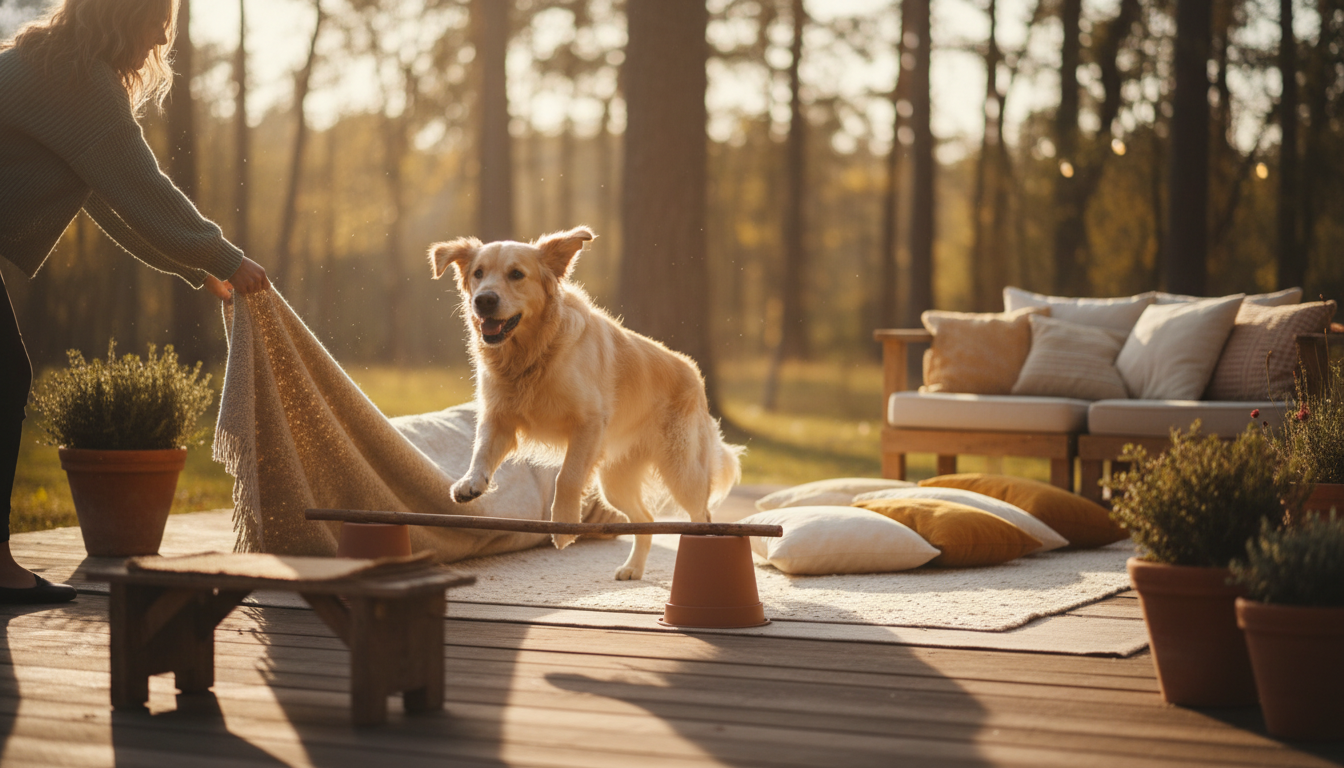
DIY Dog Agility Course Ideas for Fun and Fitness
Discover creative DIY dog agility course ideas to keep your pup active and engaged. Build a fun course at home with simple household items.
Creating a DIY dog agility course at home is a fun and effective way to keep your pup physically and mentally stimulated. It doesn't require expensive equipment or a large backyard. With a little creativity and some household items, you can set up an engaging course that challenges your dog and strengthens your bond. In this article, we'll explore a variety of ideas for building your own dog agility course and offer tips to ensure it's safe and enjoyable for your furry friend.
Understanding the Basics of Dog Agility
Dog agility is a competitive sport where dogs navigate a timed obstacle course guided by their handler. The courses typically include jumps, tunnels, weave poles, and other challenges. While professional courses are standardized, a DIY version allows for customization based on your dog's size, skill level, and interests.
Agility training not only boosts your dog's physical health but also enhances their mental acuity and obedience. It's a rewarding activity for both you and your dog, offering a productive way to burn off energy and improve communication. Before starting, consider any physical limitations your dog may have. Consult your vet if you're unsure about your dog's ability to participate in agility training.
Jumps: The Staples of Agility Courses
Jumps are fundamental to any agility course. They help improve your dog's coordination and strength. For a simple DIY jump, you can use PVC pipes or broom handles balanced on bricks or small stools. Adjust the height of the jump according to your dog's size and capability. It's crucial to ensure that the jump falls easily if your dog hits it, to prevent injury.
Another idea is using hula hoops as jump rings. Secure them with duct tape to chairs or stakes, creating a circular jump that adds variety to the course. Start with low heights to build your dog's confidence. Gradually increase the difficulty as they become more proficient.
Tunnels: Encouraging Confidence and Speed
Tunnels are exciting for most dogs and help build their confidence and speed. You can purchase collapsible play tunnels online for a relatively low cost. Alternatively, make your own using large cardboard boxes or flexible drainage pipes. Cut the boxes in a straight line, forming a tunnel, and reinforce them with tape for durability.
Encourage your dog to go through the tunnel by luring them with a treat or toy at the other end. Start with a short, straight tunnel and progressively increase its length as your dog becomes comfortable. Tunnels can be a great way to engage nervous dogs, helping them overcome fears in a controlled environment.
Weave Poles: Enhancing Agility and Precision
Weave poles are where agility courses get technical. They're designed to test and improve your dog's agility and precision. For a DIY setup, use bamboo garden stakes or PVC pipes. Stick them into the ground in a straight line, spaced about 18-24 inches apart.
Training your dog to weave requires patience. Guide them through the poles using a treat or favorite toy. Initially, you can use guides or barriers to help them stay on course. As your dog gets the hang of it, remove the aids and encourage them to weave independently. Keep sessions short and positive to maintain your dog's interest.
A-Frame and Dog Walk: Building Strength and Balance
Building an A-frame or dog walk requires a bit more effort but adds an essential element to your course. For a DIY A-frame, you can hinge two pieces of plywood together, ensuring the surface is non-slip by adding outdoor carpeting or rubber mats. Make sure the materials used are non-toxic and safe for pets.
A dog walk can be constructed using wooden planks raised on cinder blocks or sturdy boxes. Ensure that the wood is untreated and free of toxic substances. These obstacles help improve your dog's balance and muscle strength. Be patient and use positive reinforcement as your dog learns to navigate these features.
Teeter-Totter: Adding Excitement and Challenge
A teeter-totter provides an exciting challenge, helping your dog develop balance and confidence. To build one, you'll need a long, sturdy plank and a pipe or piece of wood as a fulcrum. Secure the plank's center point on the fulcrum, ensuring it tilts safely.
Introduce your dog to the teeter-totter gradually. Start by having them walk on the plank while it remains stable, then gently tip it to familiarize them with the movement. Use treats and praise to encourage your dog and build their confidence. Always supervise them closely during this exercise to prevent accidents.
Safety Tips for Your DIY Agility Course
Safety should be your top priority when creating a DIY agility course. Here are some essential tips:
- Inspect Equipment Regularly: Check for sharp edges, loose parts, or unstable structures that could harm your dog.
- Use Non-Toxic Materials: Ensure all materials are non-toxic and safe if your dog decides to chew on them. Avoid materials like treated wood or toxic paints.
- Adapt to Weather Conditions: Avoid using the course in extreme weather, which could make equipment slippery or unstable.
- Supervise at All Times: Always watch your dog as they navigate the course to prevent injuries.
- Know Your Dog's Limits: Avoid overexertion by allowing adequate rest between training sessions.
Frequently Asked Questions
How do I start training my dog for agility?
Begin with basic obedience commands like sit, stay, and come. Once your dog reliably follows these, introduce simple agility exercises like jumps and tunnels, using treats and praise for encouragement.
What breeds are best suited for agility training?
While nearly any dog can enjoy agility, breeds like Border Collies, Australian Shepherds, and Jack Russell Terriers often excel due to their energy levels and intelligence.
Can older dogs participate in agility training?
Yes, many older dogs can enjoy agility at a gentler pace. Always consult your vet to ensure your senior dog is healthy enough for physical activity, and modify the course to accommodate their needs.
How often should I train my dog on an agility course?
Short, frequent sessions are best. Aim for 2-3 times a week, keeping each session around 10-15 minutes to maintain your dog’s interest and prevent fatigue.
Is agility training good for my dog's mental health?
Absolutely. Agility training provides mental stimulation, enhances problem-solving skills, and can reduce anxiety through physical exercise and positive interactions.
Key Takeaways
- DIY agility courses can be made with household items, offering a cost-effective way to entertain and exercise your dog.
- Agility training boosts physical fitness, mental sharpness, and enhances the bond between you and your dog.
- Always prioritize safety by inspecting equipment, supervising your dog, and using non-toxic materials.
- Tailor the course to fit your dog’s size and skill level, and consult your vet if you have any concerns about your dog’s ability to participate.
- Regular training sessions that are short and positive can keep your dog engaged and eager to learn.
Sources
For personalized insights into your dog's mood and health, check out WellWhisker's Mood Check and Symptom Guide features. They’re designed to help you understand and care for your pet better.
Try WellWhisker
Homemade treat recipes, ingredient scanner, and wellness tools, personalized for your pet.
Get Started