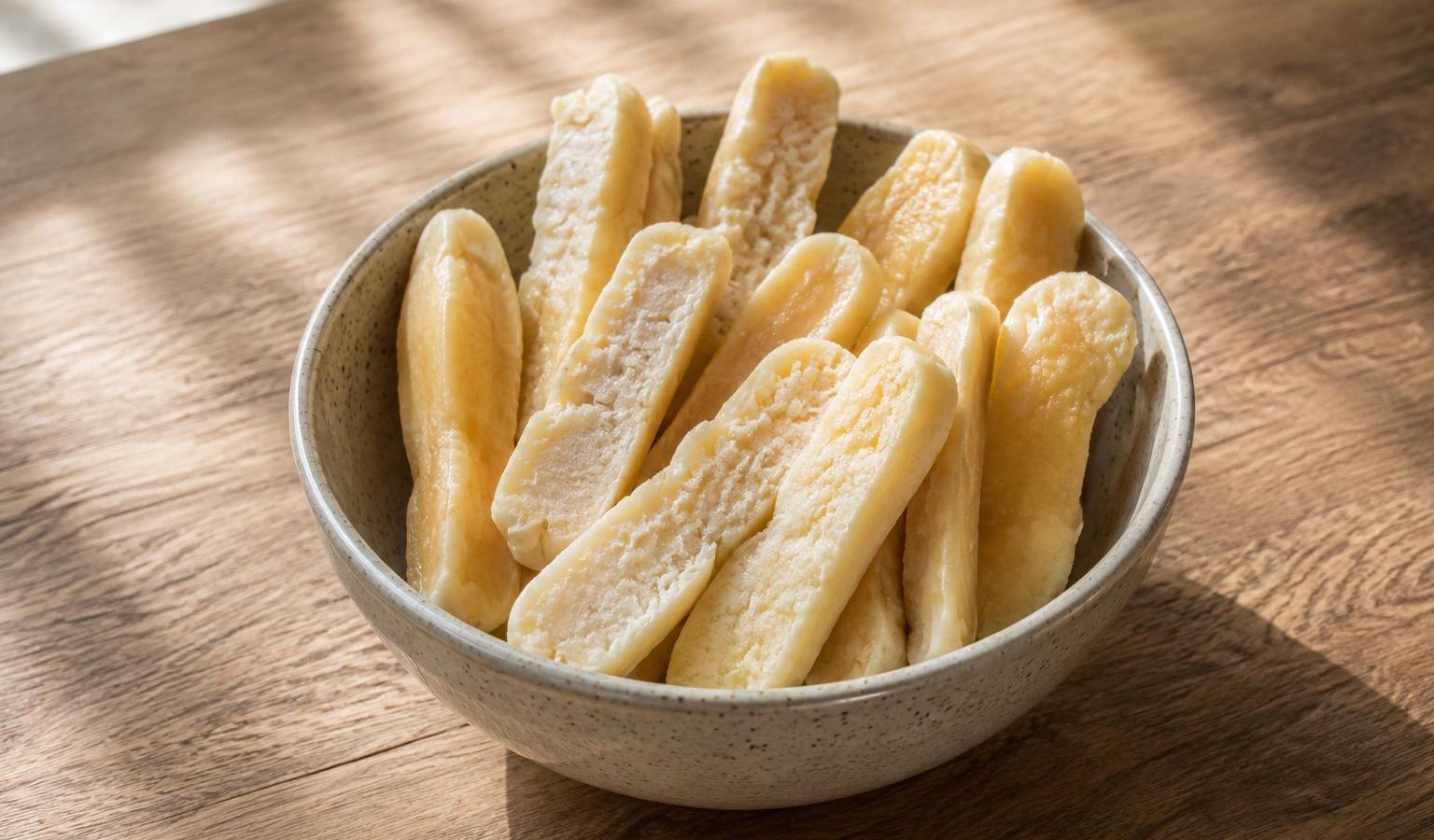

Homemade Himalayan-style cheese chews are a delightful, long-lasting treat that many dogs find irresistible. These chews provide mental stimulation, dental benefits, and are high in protein. Crafted with simple ingredients you probably already have in your kitchen, these chews are a wonderful way to enrich your dog's life.
Why This Recipe Works
These homemade cheese chews mimic the popular Himalayan dog chews, known for their durability and flavor. They are perfect for moderate chewers who love a challenge. Dogs enjoy the taste and texture, which helps satisfy their natural chewing instincts, keeping them engaged and mentally stimulated.
Nutritional Benefits
The primary ingredient, skim milk, is a good source of protein and calcium, essential for maintaining strong bones and muscles. The cheese-making process also removes most of the lactose, making these chews more digestible for dogs with mild lactose intolerance. The optional Himalayan salt can help preserve the chews, extending their shelf life.
Special Features
What sets these chews apart is their customizable firmness. By adjusting the amount of moisture you remove and how long you bake them, you can tailor the chew's hardness to suit your dog's chewing style. This flexibility makes the recipe versatile for dogs of different sizes and preferences.
What You'll Need
Ingredients
- 1 gallon skim milk
- ½ cup white vinegar
- ½–1 teaspoon Himalayan salt (optional, helps preserve the chew)
Equipment
- Large pot
- Wooden spoon
- Cheesecloth or clean dish towel
- Large bowl
- Heavy books or a weighted pan
- Baking sheet
- Wire cooling rack
Making this for your dog?
Save it in WellWhisker and get a serving size made for your pet.
Get StartedStep-by-Step Instructions
- Warm the Milk: Pour the skim milk into a large pot and heat it over low to medium heat. Stir frequently to prevent scorching.
- Create Curds: Once the milk reaches a gentle boil, turn off the heat. Stir in the vinegar and optional salt. Stir gently for 1–2 minutes until curds form, separating from the whey.
- Rest Time: Let the mixture sit undisturbed for 10–15 minutes to allow the curds to fully separate.
- Strain the Curds: Line a large bowl with cheesecloth or a clean dish towel. Pour the curdled mixture into the cloth, capturing the curds and draining the whey.
- Squeeze and Press: Twist the cloth around the curds to squeeze out as much moisture as possible. The drier the curds, the firmer the chew will be. Place the wrapped curds under a heavy weight for 4–6 hours to form a solid block.
- Cut and Bake: Unwrap the block and slice it into chew-sized pieces suitable for your dog’s size. Place on a baking sheet and bake at 150°F for about 40 minutes (or in the dehydrator at 135°F–150°F / 57°C–65°C for 6–10 hours, depending on thickness, until the chews feel firm and dry on the outside).
- Dry Completely: Transfer the baked chews to a wire rack to dry for at least 24 hours. This ensures they reach the ideal hardness and are safe for your dog to enjoy.
Freezing & Storage
Store fully dried chews in an airtight container in a cool, dry place. If they still feel moist, refrigerate and use sooner to prevent mold. Properly dried chews can last several weeks.
Serving Guide
- Small Dogs (under 20 lbs): 1 small chew
- Medium Dogs (20-50 lbs): 1 medium chew
- Large Dogs (50+ lbs): 1 larger chew
Always select a chew size too large for your dog to swallow whole. These chews can be offered a few times a week, perfect for times when you need to keep your pup occupied, such as before leaving the house or during crate time.
Safety Notes
- These chews may not be suitable for puppies, seniors, or dogs with dental issues due to their hardness.
- Always supervise your dog while they're enjoying these chews to prevent choking hazards.
- This recipe contains dairy. Monitor your dog for any allergic reactions, especially if they have lactose sensitivity.
- Treats should account for no more than 10% of your dog’s daily caloric intake.
- Introduce new ingredients one at a time to monitor for adverse reactions.
Make It Easier / Harder
- Easier: If your dog is new to chews, reduce the drying time for a softer chew that’s easier to bite.
- Harder: For more experienced chewers, press the curds very firmly and extend the drying time to create a more challenging, long-lasting chew.
Frequently Asked Questions
What if my dog is lactose intolerant?
Most of the lactose is removed during the cheese-making process, but if your dog is highly sensitive, consult with your vet before offering these chews.
Can I use whole milk instead of skim milk?
Skim milk is recommended because it curdles better and results in a firmer chew. Whole milk may produce a softer product.
How do I know if the chews are dry enough?
The chews should feel hard and have no give when pressed. If they are still soft or pliable, they need more drying time.
Can I add flavors to the chews?
While this recipe is best kept simple, you can experiment with small amounts of dog-safe herbs like parsley or rosemary for a subtle flavor twist.
Key Takeaways
- Homemade Himalayan-style cheese chews are high-protein, long-lasting treats.
- Skim milk curds are pressed and dried for customizable firmness.
- These chews are tailor-made for moderate chewers and provide mental stimulation and dental benefits.
- Always supervise your dog while enjoying these chews to ensure safety.
- Store in a cool, dry place to extend shelf life.
Save this recipe for later
Keep the recipes your dog loves in one place, find new ones every week, and import the ones you find anywhere else. WellWhisker sizes every serving for your pet.
Want more like this? see every homemade dog treat recipe in one place.
This post contains affiliate links. If you purchase through these links, we may earn a small commission at no extra cost to you. This helps us keep creating free recipes for pet parents everywhere.
Disclaimer
This recipe is for supplemental feeding and enrichment only, not a meal replacement. Every pet is different. If your pet has food allergies, sensitivities, or health conditions, consult your veterinarian before introducing new foods. WellWhisker provides general wellness information and is not a substitute for professional veterinary advice.
Looking for more recipes like this? WellWhisker's Recipe Lab has a growing library of enrichment recipes tailored to your pet. Try it free at wellwhisker.app